
For Instant Control of Nausea Associated with Acidity
No Acidity. No Nausea.
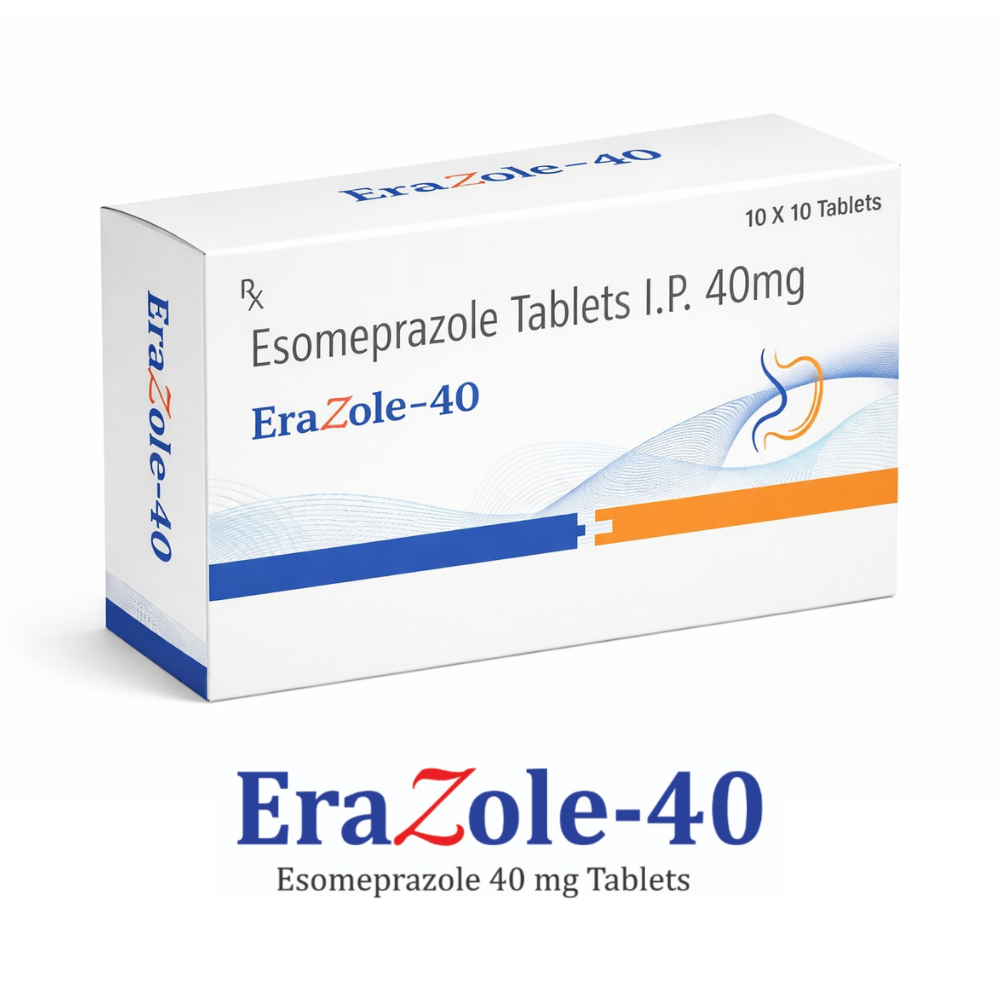
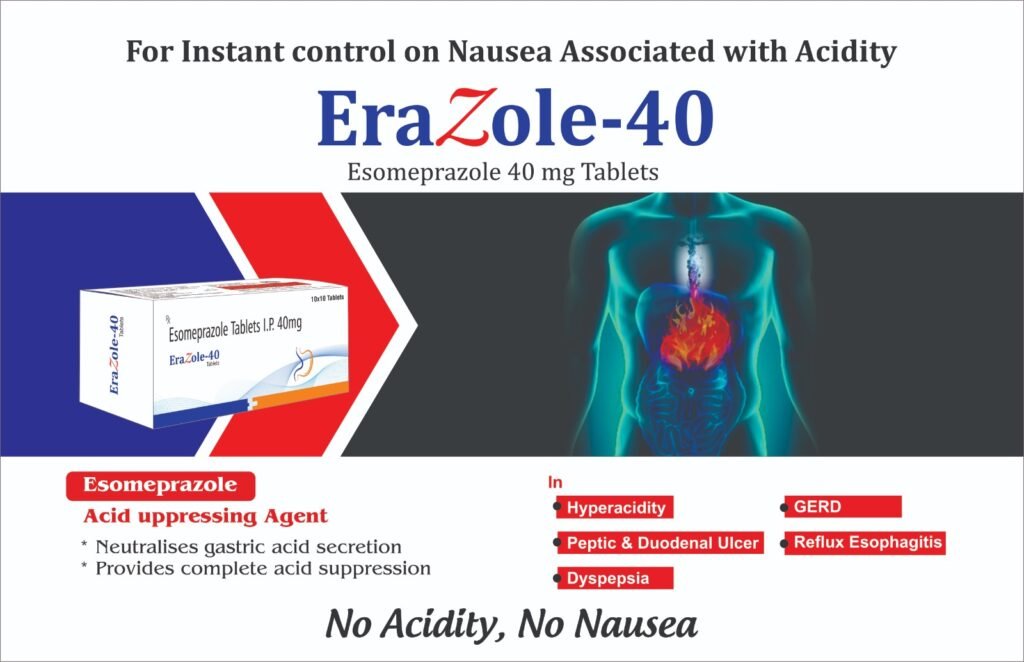
Erazole 40 Summary Table
| Parameter | Details |
|---|---|
| Brand name | EraZole-40 |
| Composition | Esomeprazole 40 mg |
| Dosage form | Tablet |
| Therapeutic class | Proton pump inhibitor (PPI) |
| Mechanism of action | Inhibits H⁺/K⁺-ATPase enzyme to suppress gastric acid secretion |
| Indications | GERD, hyperacidity, peptic ulcer, duodenal ulcer, dyspepsia, reflux esophagitis |
| Recommended dose | 1 tablet daily before meals |
| Common side effects | Headache, nausea, abdominal discomfort, diarrhea |
| Precautions | Monitor long-term use; caution in liver disease |
| Storage | Store below 30°C, dry and protected from light |
| Key advantages | Strong acid suppression, rapid relief, once-daily dosing |
Product Summary
EraZole-40 contains Esomeprazole 40 mg, a next-generation proton pump inhibitor (PPI) that provides powerful and sustained acid suppression. It is designed for the effective management of acid-related gastrointestinal disorders, offering rapid relief from hyperacidity, heartburn, and nausea associated with acid reflux.
By inhibiting gastric acid secretion at its source, EraZole-40 helps restore digestive comfort and promotes healing of the gastric and esophageal mucosa.
Key Benefits
➤ Complete Acid Suppression
- Potently inhibits gastric acid secretion
- Provides long-lasting relief from acidity and heartburn
- Helps maintain optimal gastric pH
➤ Relief from Nausea Associated with Acidity
- Reduces acid irritation in the stomach
- Helps control nausea and discomfort linked to reflux
➤ Promotes Healing of GI Mucosa
- Supports healing of erosive esophagitis
- Effective in peptic and duodenal ulcers
➤ Once-Daily Convenience
- Sustained action with a single daily dose
- Improves compliance and patient outcomes
Mechanism of Action
Esomeprazole (40 mg)
- Proton pump inhibitor (PPI)
- Blocks the H⁺/K⁺-ATPase enzyme in gastric parietal cells
- Suppresses both basal and stimulated acid secretion
- Promotes healing of acid-related damage in the stomach and esophagus
Indications
EraZole-40 is indicated for:
- Hyperacidity
- Gastroesophageal reflux disease (GERD)
- Reflux esophagitis
- Peptic ulcer disease
- Duodenal ulcer
- Dyspepsia
- Acid-related nausea
Dosage & Administration
- One tablet daily, preferably before meals
- Swallow whole; do not crush or chew
- Use as directed by physician
Side Effects
Generally well tolerated:
- Headache
- Nausea
- Abdominal pain
- Diarrhea or constipation
- Flatulence
Precautions
- Long-term use may require monitoring of Vitamin B12 and magnesium levels
- Use cautiously in liver impairment
- Avoid unnecessary prolonged use without medical supervision
- Not recommended in pregnancy unless prescribed
Storage
Store below 30°C, in a cool and dry place.
Protect from moisture and sunlight.
Key Advantages of EraZole-40
- Advanced PPI therapy for strong acid control
- Provides rapid relief from acidity and nausea
- Supports healing of ulcers and esophageal damage
- Once-daily dosing for convenience
- Clinically established efficacy and safety
References (APA 7)
Kahrilas, P. J., Shaheen, N. J., Vaezi, M. F., & American Gastroenterological Association. (2008). American Gastroenterological Association medical position statement on the management of gastroesophageal reflux disease. Gastroenterology, 135(4), 1383–1391. https://doi.org/10.1053/j.gastro.2008.08.045
Sharma, P., & Vakil, N. (2011). Review article: Acid suppression and proton pump inhibitors in gastro-oesophageal reflux disease. Alimentary Pharmacology & Therapeutics, 34(2), 123–136. https://doi.org/10.1111/j.1365-2036.2011.04707.x
Strand, D. S., Kim, D., & Peura, D. A. (2017). 25 Years of proton pump inhibitors: A comprehensive review. Gut and Liver, 11(1), 27–37. https://doi.org/10.5009/gnl15502
Moayyedi, P., & Delaney, B. (2010). Gastro-oesophageal reflux disease. The Lancet, 375(9713), 119–128. https://doi.org/10.1016/S0140-6736(09)60691-0
Forgacs, I., & Loganayagam, A. (2008). Overprescribing proton pump inhibitors. BMJ, 336(7634), 2–3. https://doi.org/10.1136/bmj.39406.449456.BE